Updated HESI RN Exit Exam Test Bank for 2025/2026 Versions 1–7 with Diagrams, Rationales & Photos
Course:
HESI EXIT
Institution:
HESI EXIT
Updated HESI RN Exit Exam Test Bank for 2025/2026 Versions 1–7 with Diagrams, Rationales & Photos HESI RN Exit Exam v1 The nurse is completing the admission assessment of a 3-year-old who is admitted with bacterial meningitis and hydrocephalus. Which...

After purchase, you get:
✅ Instant PDF Download
✅ Verified answer explanations
✅ Refund if not Satisfied
✅ Prepared for 2025/2026 test cycle
Overview
Each section begins with foundational ideas and gradually introduces more challenging concepts for balanced progression. This building-block approach ensures you have the necessary basics before tackling advanced material. Learners appreciate how each concept naturally flows from what came before, creating a cohesive learning experience. The thoughtful sequencing prevents knowledge gaps that can undermine your self-assurance and performance.
Who Is This For?
Ideal for students, instructors and professionals preparing for HESI RN Exit Bank for / Versions 1–7 with Diagrams, Rationales & Photos and related HESI EXIT exams. Many learners find this format helps them identify knowledge gaps quickly. The material works well for both individual study and classroom settings.
Related Keywords
Detailed Study Description
Frequently Asked Questions
Document Information
| Uploaded on: | December 6, 2025 |
| Last updated: | December 8, 2025 |
| Number of pages: | 829 |
| Written in: | 2025/2026 |
| Type: | Exam (elaborations) |
| Contains: | Questions & Answers |
| Tags: | Updated HESI RN Exit Exam Test Bank for 2025/2026 Versions 1–7 with Diagrams, Rationales & Photos HESI RN Exit Exam v1 The nurse is completing the admission assessment of a 3-year-old who is admitted with bacterial meningitis and hydrocephalus. Which assessment finding is evidence that the child is experiencing increased intracranial pressure (ICP)? A. Tachycardia and tachypnea B. Sluggish and unequal pupillary responses C. Increased head circumference and bulging fontanels D. Blood pressure fluctuations and syncope - ✔✔- ANSWER-✔✔- B. Sluggish and unequal pupillary responses Rationale: Sluggish and unequal pupillary responses are a direct sign of increased intracranial pressure affecting cranial nerves, particularly the oculomotor nerve (cranial nerve III). These findings indicate neurologic deterioration and warrant immediate intervention. Explanation of Incorrect Options: • A. Tachycardia and tachypnea: These are nonspecific findings and may occur with fever or infection but are not reliable indicators of increased ICP. In fact, bradycardia (not tachycardia) is often seen with rising ICP. • C. Increased head circumference and bulging fontanels: These are signs more typically seen in infants due to open sutures. By 3 years of age, the fontanels are generally closed, making this less likely. • D. Blood pressure fluctuations and syncope: While late signs of increased ICP can include changes in vital signs, syncope is not typically associated with elevated ICP in children and is more common with cardiac or vasovagal events. |
Seller Information

AdelineJean
User Reviews (0)
Exam (Elaborations)
$17.50
Add to Cart
100% satisfaction guarantee
Refund Upon dissatisfaction
Immediately available after purchase
Available in Both online and PDF
$17.50
| 0 sold
Discover More resources
Inside The Document
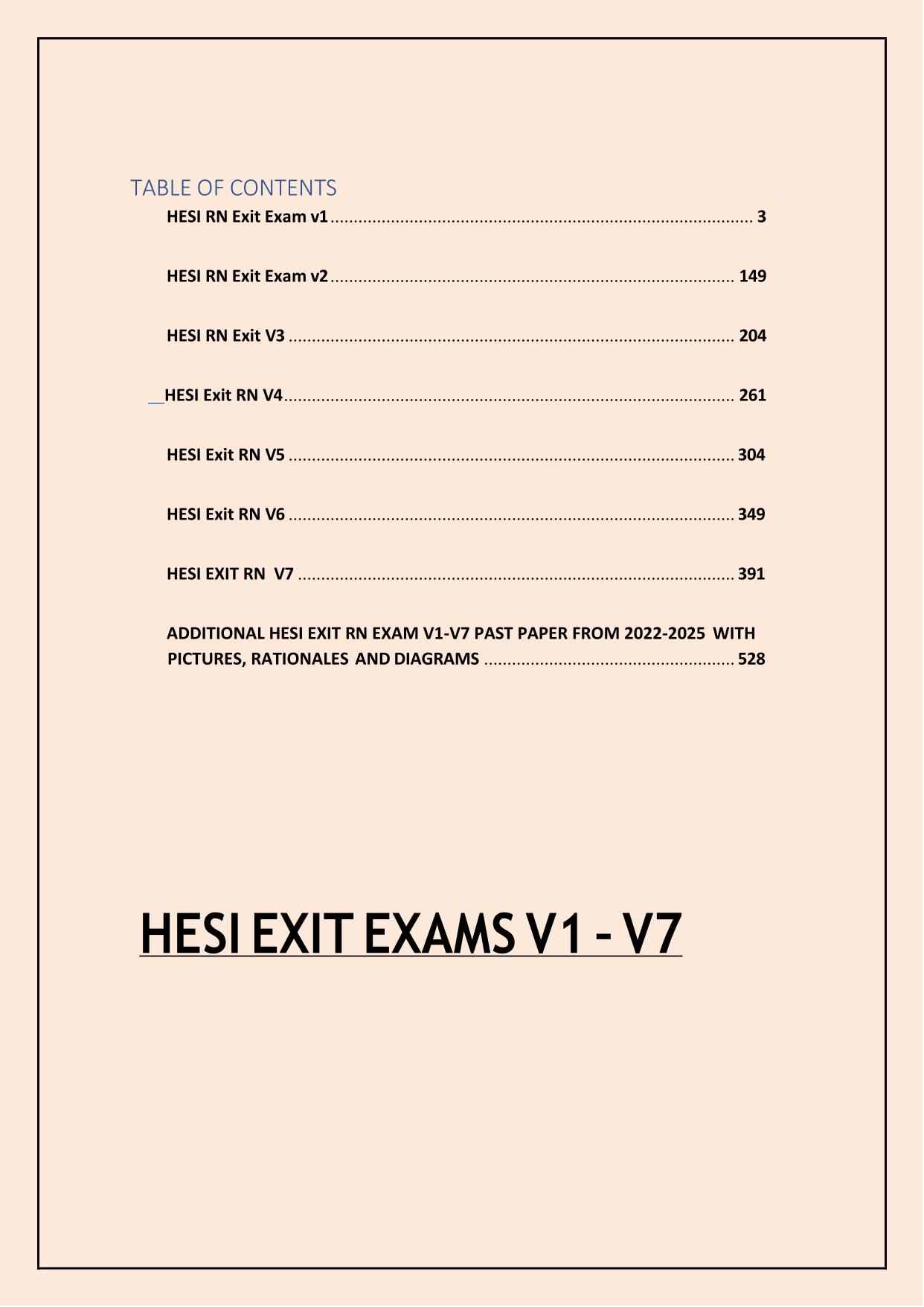
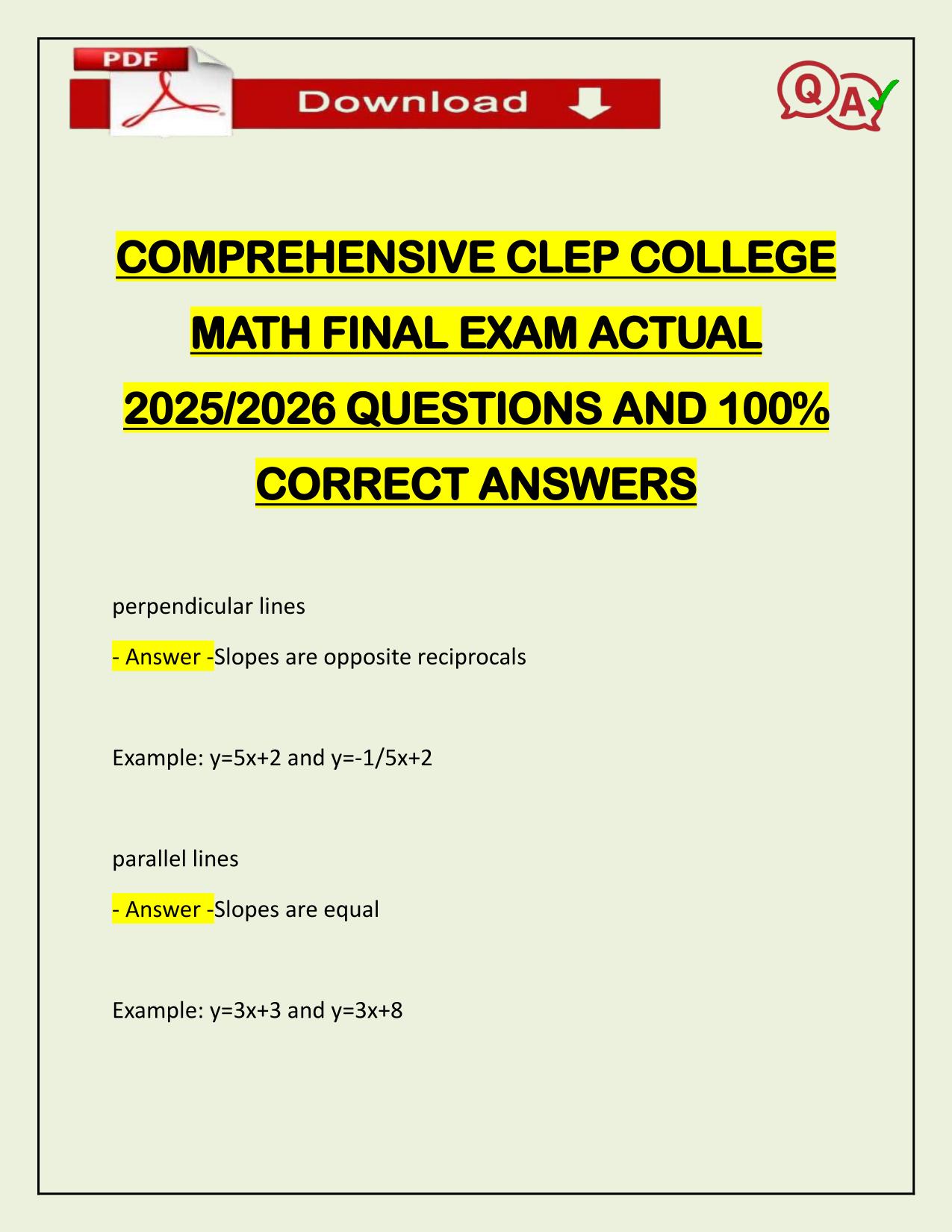
Latest HESI RN Exit Exam Test Bank 2026 All Versions 1–7 & EXTRA Past Papers 2022–2025 (inclusive of Diagrams, Rationales & Photos TABLE OF CONTENTS HESI RN Exit Exam v1 ........................................................................................... 3 HESI RN Exit Exam v2 ....................................................................................... 149 HESI RN Exit V3 ................................................................................................ 204 HESI Exit RN V4 ................................................................................................. 261 HESI Exit RN V5 ................................................................................................ 304 HESI Exit RN V6 ................................................................................................ 349 HESI EXIT RN V7 .............................................................................................. 391 ADDITIONAL HESI EXIT RN EXAM V1-V7 PAST PAPER FROM 2022-2025 WITH PICTURES, RATIONALES AND DIAGRAMS ...................................................... 528 HESI EXIT EXAMS V1 – V7 HESI RN Exit Exam v1 The nurse is completing the admission assessment of a 3-year-old who is admitted with bacterial meningitis and hydrocephalus. Which assessment finding is evidence that the child is experiencing increased intracranial pressure (ICP)? A. Tachycardia and tachypnea B. Sluggish and unequal pupillary responses C. Increased head circumference and bulging fontanels D. Blood pressure fluctuations and syncope - ✔✔- ANSWER-✔✔B. Sluggish and unequal pupillary responses Rationale: Sluggish and unequal pupillary responses are a direct sign of increased intracranial pressure affecting cranial nerves, particularly the oculomotor nerve (cranial nerve III). These findings indicate neurologic deterioration and warrant immediate intervention. Explanation of Incorrect Options: • A. Tachycardia and tachypnea: These are nonspecific findings and may occur with fever or infection but are not reliable indicators of increased ICP. In fact, bradycardia (not tachycardia) is often seen with rising ICP. • C. Increased head circumference and bulging fontanels: These are signs more typically seen in infants due to open sutures. By 3 years of age, the fontanels are generally closed, making this less likely. • D. Blood pressure fluctuations and syncope: While late signs of increased ICP can include changes in vital signs, syncope is not typically associated with elevated ICP in children and is more common with cardiac or vasovagal events. Test-Taking Tip: In pediatric patients, neurologic signs like pupillary changes and altered level of consciousness are more reliable indicators of increased ICP than general signs such as changes in heart rate or respiratory rate. Know which signs are age-appropriate. DIF: Analysis REF: Pediatric Nursing: Content Review and NCLEX®-Style Q&A OBJ: Neurological assessment and prioritization in pediatrics TOP: Pediatric Neurological Disorders A client with acute pancreatitis is admitted with severe, piercing abdominal pain and an elevated serum amylase. Which additional information is the client most likely to report to the nurse? A. Abdominal pain decreases when lying supine B. Pain lasts an hour and leaves the abdomen tender C. Right upper quadrant pain refers to right scapula D. Drinks alcohol until intoxicated at least twice weekly. - ✔✔- ANSWER-✔✔-A. Abdominal pain decreases when lying supine Rationale: Chronic or binge alcohol consumption is one of the most common causes of acute pancreatitis. Alcohol leads to inflammation of the pancreatic ducts and premature activation of pancreatic enzymes, which results in autodigestion of the pancreas and intense abdominal pain. Explanation of Incorrect Options: • A. Abdominal pain decreases when lying supine: This is incorrect. Pancreatic pain typically worsens when lying flat and improves when siFng up and leaning forward. • B. Pain lasts an hour and leaves the abdomen tender: Pancreatic pain is persistent and severe, often lasting for hours to days. It is not typically transient.
CourseHero & Studypool Unlocks
Get Unlocked CourseHero and Studypool documents files instantly to your email, simply by pasting your link and clicking "Unlock Now". Learn more on how to unlock here.


Gradesity

We are here to help
Questions? Leave a message!
Newsletter
Get notified upon new uploads. Subscribe to our Newsletter.